When people wax poetic about how comedy has become sanitized, and that you can’t say the things you used to on television anymore, one name always naturally comes into peoples’ minds: Mel Brooks. Blazing Saddles (1974), Young Frankenstein (1974) and The Producers (1967)/(2005) all rank among some of the funniest and raunchiest comedy classics, and their success can be attributed to his sense of timing and humor. Brooks is known for his unflinchingly crass brand of humor, Spaceballs (1987) is a little low brow, but his stuff is always provocative and loud, and so too was our movie pick this week: History of the World: Part I (1981). This one is a particular movie club “warm fuzzy” because it’s our first rewatch! We first watched History of the World: Part I during covid lockdowns, back in 2020 before we started keeping track of our watch dates. Read on to see my thoughts on this comedic chronology!
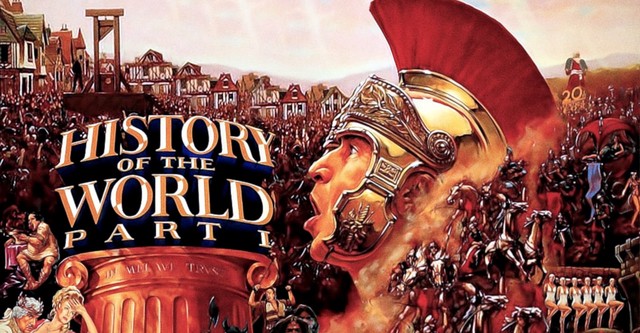
The following contains spoilers for History of the World: Part I (1981)
Mel Brooks’ sense of humor is difficult to describe. I think most people do him a disservice when they think of him as just being crass. Don’t get me wrong, History of the World: Part I doesn’t shy away from sex and foul language, but it also sways back and forth between sections that are positively packed with subtle snappy jokes and scenes that belabor a single funny gag. Some of the jokes had me laughing at how clever they were moments after they happened, and some were just loud, silly, mean performances. The movie moves through scenes at the pace of a Saturday Night Live episode, with sections of history played out in short sketches. In 2023, some of the comedy does feel like it’s folded in on itself: hearing the Orson Welles say cavemen’s names was probably a big laugh back in the day, but I’m a little more desensitized to that now; VoiceGPT exists, we can make Spongebob say “fuck.” Bits like “the invention of music” still feel original though, and had me laughing at the concept even when the performances were a little corny. Corniness is kind of on brand here anyway.
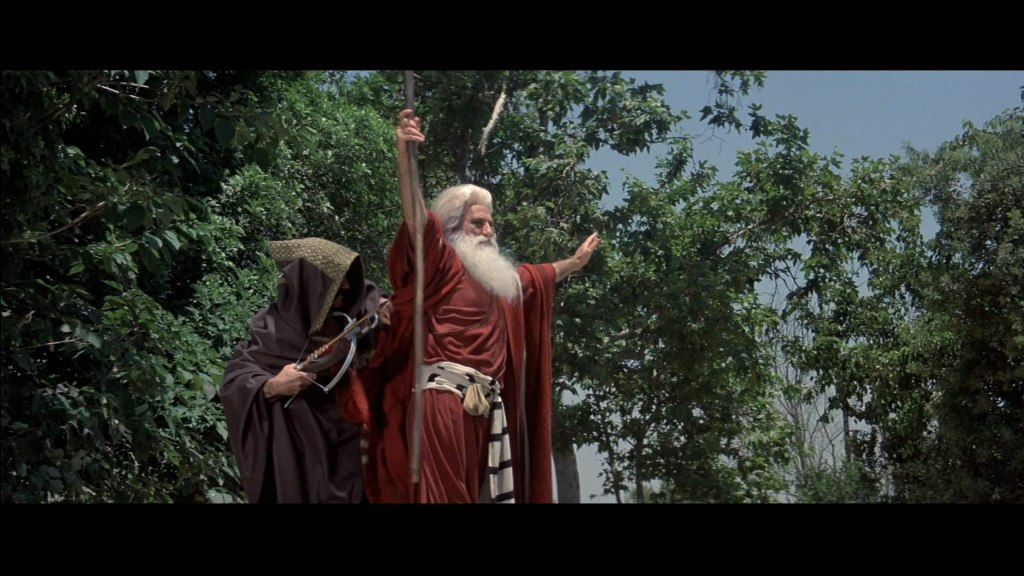
It’s really too bad that so little time is spent on the Old Testament, maybe because it was a little too religious, but it felt like there was a lot of material they skipped through. I could easily imagine half a dozen sketches about the Old Testament, but Mel Brooks’ performance as Moses is still a great single entry. All my life I’ve been hearing people do this impression at bar/bat mitzvah’s and seders; we love the dropping the tablets bit, and I love when something like that is still funny, despite how much it gets repeated. Maybe funnier was his appearance later, when Moses parts the sea in what our watch group universally identified as the pool featured in Universal Studios’ back lot tour. The Yiddishisms he mutters to himself in that scene after he gets robbed had me cackling, and reminded me a little of my grandpa—but I’m jumping ahead.
The first main plot thread is set in Rome, chronicling stand up philosopher Comicus’ rise and fall. Don’t worry too much, while there is a continuity between these scenes, the story isn’t really the main focus; we’re here for the jokes. Gregory Hines is hilarious as Josephus and Madeline Kahn has such a contagious performance as Nympho, I swear I’ve been hearing people do impressions of her without even knowing who she is for years. It’s probably worth noting that this scene has some of the harder language in it than any other part of the movie, but it was still pretty funny despite any tension it brought up. While Mel has most of the funny lines, the stars of the scene are Dom DeLuise as Caesar (who I didn’t recognize without his beard!), and Howard Morris as the Court Spokesman. Morris feels like he deserves a particular spotlight, as many probably won’t recognize his face, but he actually had a prolific TV career, particularly as a voice actor, appearing in over 100 episodes of Garfield and Friends, as well as appearing in shows like Cow and Chicken, I Am Weasel, and over 77 episodes of McDonaldland. I know, I was surprised too! Dom DeLuise has the particularly fun role of the greediest ogre to grace the screen, but some of the fat jokes did have me wondering what it must have been like to be cast as a character who get made fun of for being overweight. I’m not saying it isn’t funny, but comedians and actors must have a pretty thick skin to get cast into roles like that.
Gregory Hines gets to have some cartoony bits with the help of some really fun props in a scene where a woman dances provocatively to determine who among a group of men isn’t a eunuch. This leads into a particularly slapstick stretch of the movie, where Comicus, Josephus, and company are pursued by Roman soldiers, riding a horse named Miracle. Josephus gets another fun prop when they find a patch of particular plants growing on the side of the road, and roles it into a giant joint to light and waft behind them to pacify the pursuing soldiers. Again, this isn’t high brow humor, but if you’re turning your nose up now, Mel Brooks only ups the ante from here. Comicus goes into hiding as a waiter, and ends up serving the last supper. It’s fun to have another religious bit, but this one feels a little more belabored, at least until Leonardo da Vinci enters and begins painting the scene as if he’s capturing a daguerreotype. I thought it was funny to tie the historical stuff together with the Biblical in this kind of pastiche, and honestly would have loved to see more of it, if we didn’t have to move through history so quickly.
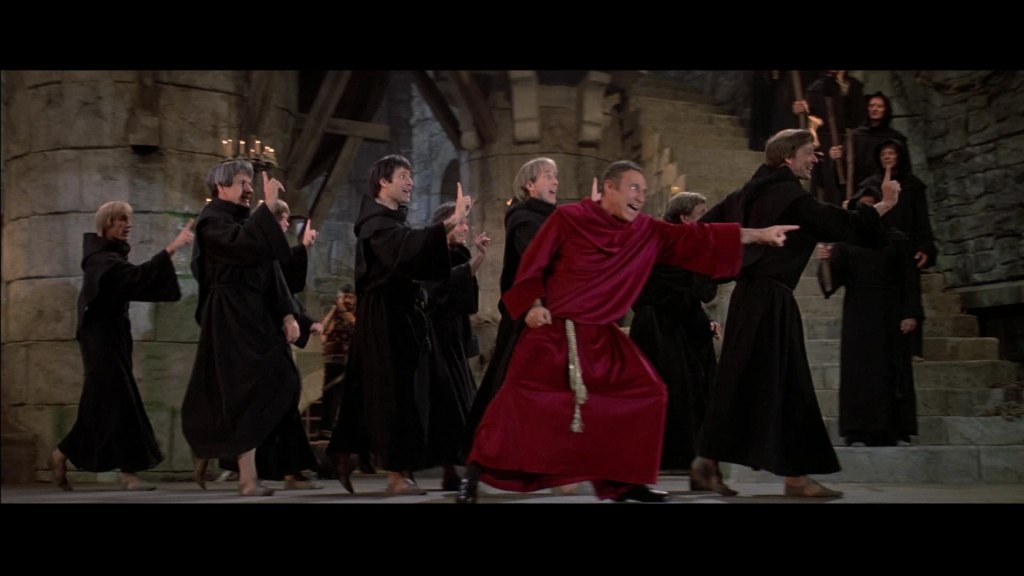
The next sketch is “The Spanish Inquisition,” and here, Mel really lets his inner theater kid loose. Dozens of hilariously choreographed monks, torturers, and prisoners dance and sing on an impressive set for almost eight minutes. Mel stars as Grand Inquisitor, Torquemada, whose name is twisted into such a silly pun you’d think they made his name up for the bit. The stage is as much a star as the players though; notable set pieces include a torture wheel slot machine, and a synchronized aquatic performance from the Spanish nuns. The scene dips into some familiar Jewish humor territory with the prisoners, but like Mel’s iconic Springtime for Hitler, the goal is to take back the power of something culturally traumatizing like the notion of being exterminated and finding the humor in it. It’s provocative, but more than anything, it’s funny. When the air bubble containing one of the Jews’ “oy”s bursts at the water’s surface, it always gets a laugh from me.
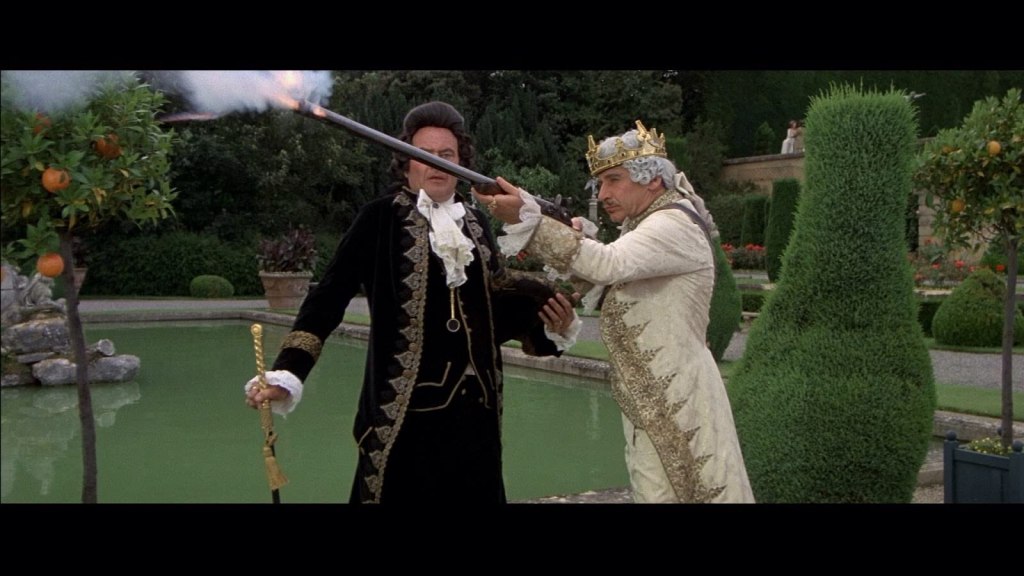
The French Revolution section depicts an abbreviated take of the Prince and the Pauper; Mel Brooks plays both the King of France and the King’s Piss Boy, the servant who holds a bucket under him so he can go to the bathroom wherever he likes. This section really leans into raunchiness for its humor; gangbangs, rapes, and non-consentual groping are all a part of the King’s repertoire, and it’s good to be the king. When the revolutionaries become inconsolable, the King switches places with his Piss Boy, and the servant is left to face the punishment. We get to see Mel have a lot of fun in this role. The King is just nasty, he orders a brigade of little people to have an orgy with him; all of this is supposed to offend you, but it keeps the focus on the absurdity rather than sexual gratuity.
Eventually, Piss Boy is captured by the mob. He’s about to place his head in the guillotine, as the King, when who should appear on the scene but Josephus, riding in a cart pulled by Miracle–it’s a miracle! The characters from the previous era come barreling into the scene and rescue Piss Boy, returned to Comicus. As they ride off into the distance, our heroes see THE END on the horizon, and enjoy their final big screen moments together before the credits roll. I’ll be the first to say it, I don’t think Mel Brooks knows how to end a movie; I’ve found some of his other work to fall a bit short at the end, and in something as otherwise tight as this, it shows. Brooks like to embrace absurdity in his comedies, but this maneuver to get the audience cheering for the characters is at odds with this otherwise being a sketch comedy.
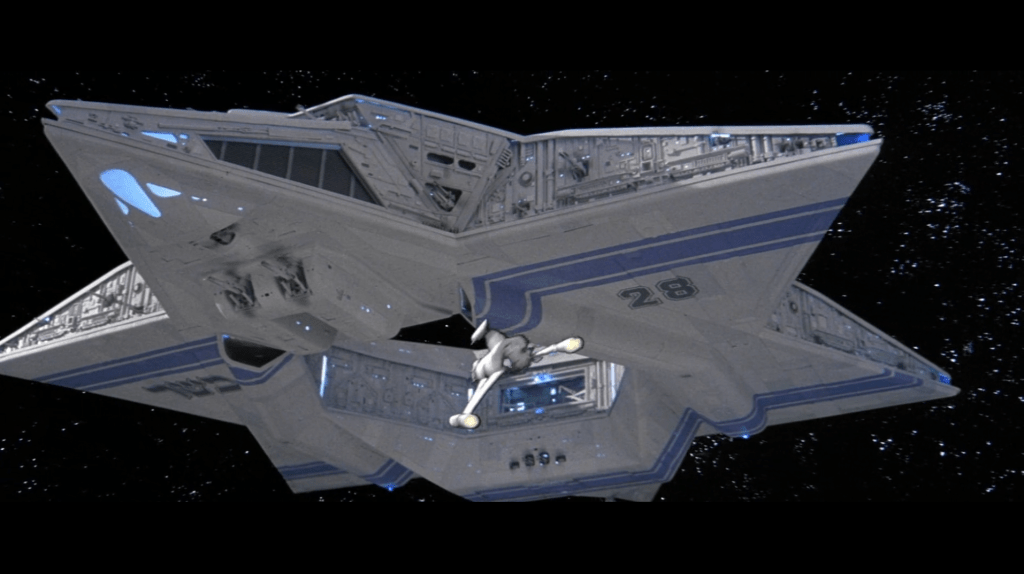
But wait! There’s more! Brooks teases us with scenes from the upcoming Part 2, a supplemental film that until relatively recently was only ever intended as a joke. Jews in Space and Hitler on Ice, again, go for Brooks’ typical shock humor, but at this point in the movie, we’re along for the ride. I don’t know if either of these sketches actually appeared in the new History of the World: Part 2 series being made 40 years later, but I always felt like Spaceballs fulfilled that promise a little.
History of the World: Part I was still a blast to watch, even if some of its humor is a little aged. One can’t help but be taken in by its sheer sense of wit, even if they turn their nose up at the now dated slurs and sex humor; the good stuff holds up. This is probably one of Brooks’ more approachable movies and I’d still say it isn’t family friendly. In writing this, I looked up Mel Brooks’ IMDB page, and saw his most recent movie was an animated dog movie called Paws of Fury: The Legend of Hank (2022), so maybe that’s more for the kids. Whatever he’s churned out since, classics like this are the reason Mel Brooks is considered one of the kings of comedy. And it’s good to be king.

