This week, Nintendo rereleased Golden Sun and it’s sequel Golden Sun: The Lost Age as a part of their Nintendo Switch Online service offering, so it feels like a perfect opportunity to revisit a classic from my boyhood. The series was regarded as a breakout hit on the Game Boy Advance, but strangely never really moved beyond that system; a sequel, Golden Sun: Dark Dawn was released on the Nintendo DS years later, but although it was well received, it didn’t live up to the expectations set by its predecessors. To this day, and in the months leading up to this rerelease, I have yet to encounter an RPG that is as accessible and complex as Golden Sun, and I’m delighted to play it again now.
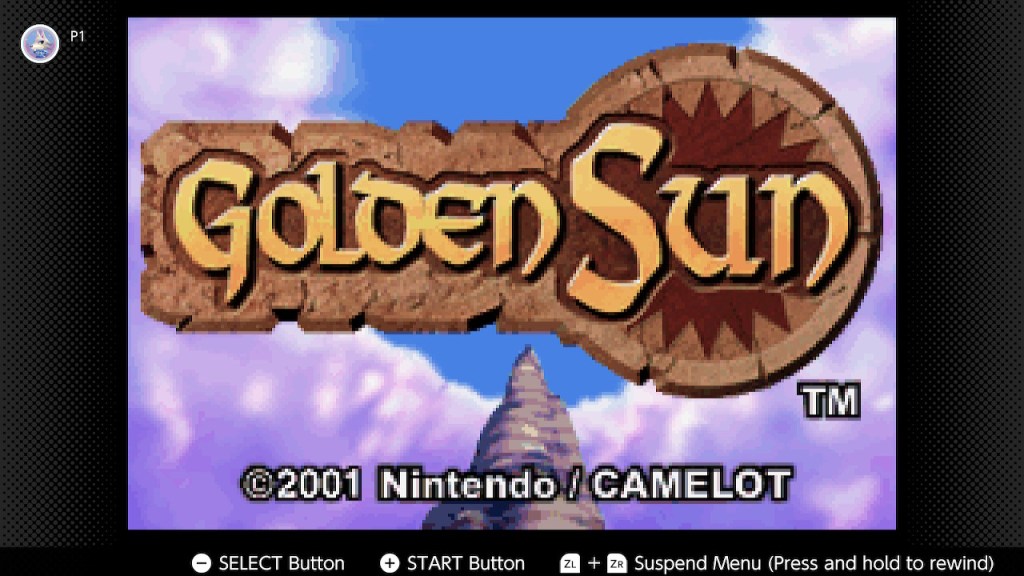
On a fateful day in the village of Vale, a boy is killed, and three friends who hold themselves responsible begin training their psynergy abilities, blaming themselves for the untimely death. Years later, Isaac, Garet and Jenna trek to the Sol Sanctum, a sacred temple on Mt. Aleph, and accidentally release the djinni, mystical keepers of alchemy that will awaken the secrets of psynergy throughout the land. After Jenna is kidnapped by a band of mysterious warriors who seek to relight the four lighthouses, further releasing the restraints on this magic, Isaac and Garet resolve to pursue them and put a stop to their chaotic plot. Along the way they meet Ivan and Mia, two more adepts who join their cause for reasons of their own.
From the outset Golden Sun defines its magic in a different context to most fantasy stories. Psynergy is known only to a select few, awakening in only a small portion of the population. While the abilities are known by everyone in the hometown of Vale, visiting other townships reveals that adepts and those with similar abilities are quite rare. The understanding adepts have of alchemy as something that can be studied and manipulated always reminded me of the X-men; we aren’t playing as lightning-bolt throwing wizards, we’re playing as young adults with miraculous powers, some that even they may not fully understand. Mia’s perspective, seeing her powers as a consequence of her Mercury Clan heritage, further cements this idea to me.
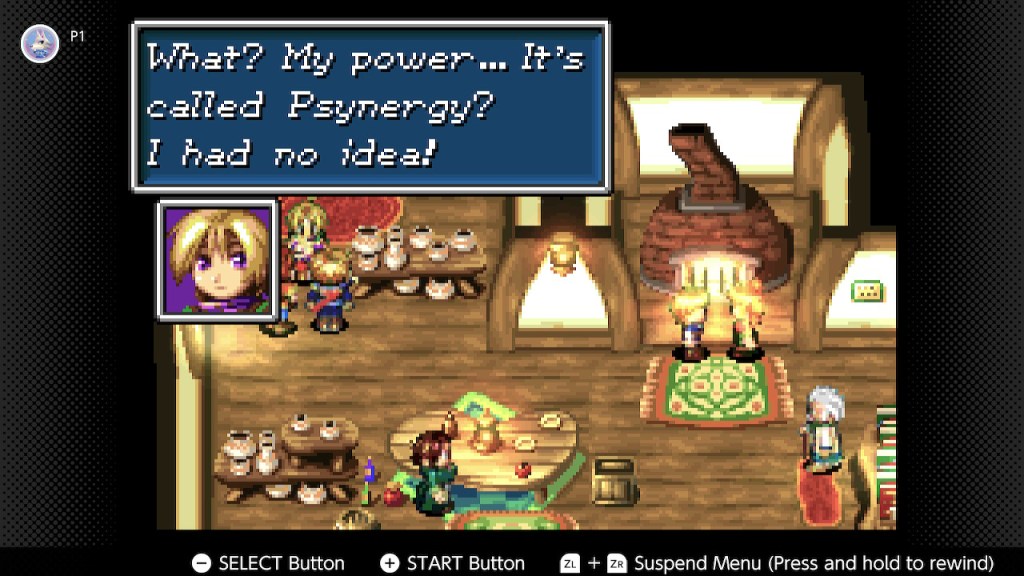
Another aspect that’s always stood out to me are the allusions to Judaism in the presentation of this world. Perhaps it’s simply because this is a lens I bring with me to all the media I consume, but something about Mt. Aleph (the Hebrew letter “a”) and Vale’s traditions about alchemy as both a religion and a science feels very familiar. Before I get too lost, I should say Golden Sun is an eclectic blend of several cultures, with its use of the Arabic term “djinni” and their Roman elemental types: Jupiter, Mars, Mercury, and Venus; I don’t mean to claim that Golden Sun is more Jewish than anything else, but the opening in particular really reminds me of that dichotomy between spirituality and academics that Jewish culture exudes. Kraden, a villager who pursues knowledge of alchemy with a scientific zeal, has a completely different perspective on the subject than the clergy and Spiritual Healer of Vale, who offer a much more religious and symbolic interpretation of alchemic occurrences. Presenting alchemy in these two lights early on in the game has a dramatic effect on how the player understands the magical occurrences in the game, and offers an interesting insight into the mechanics of the world: most people don’t know this why things are the way they are, but it affects them all the same. For some reason, Jewishness has always given me a similar feeling. Maybe everyone feels that way about their own culture.
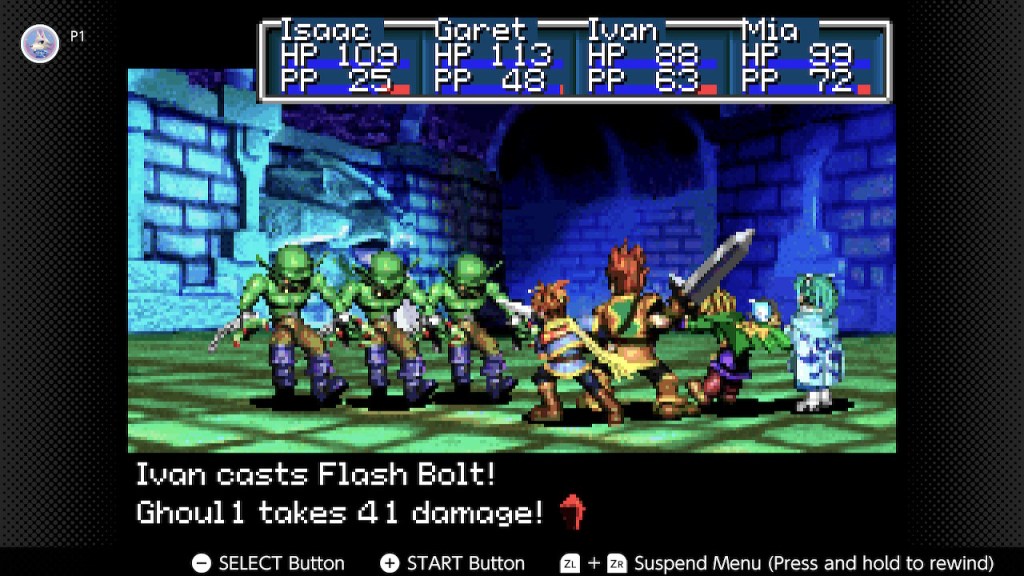
Golden Sun has pretty standard mechanics when it comes to turn-based RPGs, but it’s where it deviates that things get interesting. By setting different elemental djinni to a character you can access different psynergy abilities, some of which have effects in the overworld. As a kid, I always assigned djinn to the adept of the corresponding element, but the game really rewards you for passing them around to different party members to discover more abilities. After using their ability in combat, djinn can be used to cast a summon. These visually splashy attacks feel rewarding to unlock, although in some cases can be a little harder to comprehend with the sprites blown up so big. I found the undocked Switch display to be a good size, but up on the TV many of these sprites are fuzzy, or too fast to identify.
Golden Sun’s visual presentation was perfect for the Game Boy Advance, and while it still looks great on Switch, it’s definitely seen better days. Seeing everything larger than I remember, what stands out to me most are the character portraits used in cutscenes, and the text effects convey labored dialogue and loud environmental noises. This game also makes use of pantomiming and emoji-like expressions with the character sprites to convey feelings, or express when something the player already knows is explained to another character. Golden Sun isn’t a particularly wordy game, it’s far more text-light than I remembered compared to other RPGs, and these overworld cutscene techniques allow the game to communicate a lot of emotion.
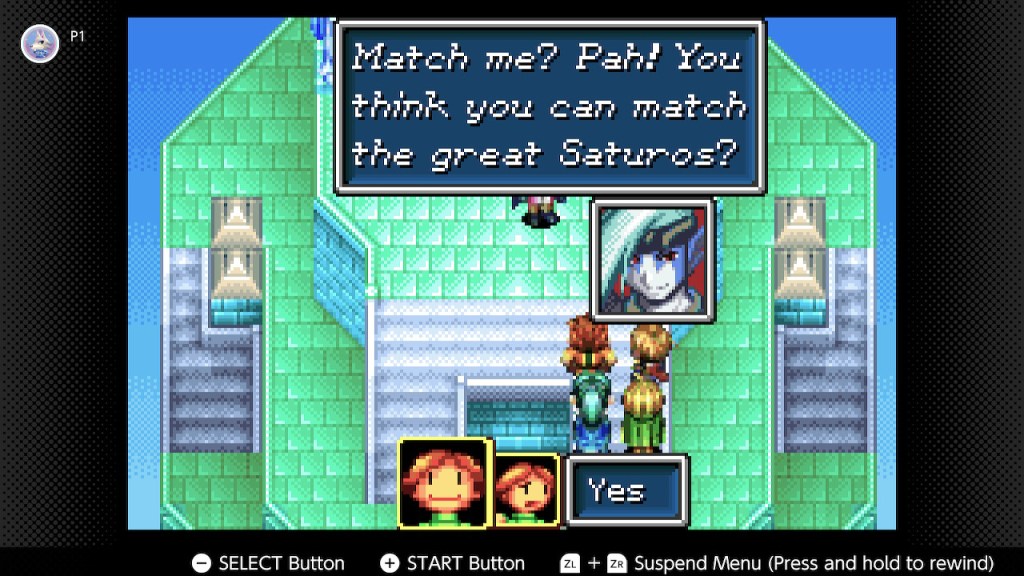
What’s very impressive about Golden Sun is the nonlinear gameplay. After the inciting incidents, the game really opens up and can sort of be tackled, or at least visited, in any order. I remember as a kid being excited that I could just walk to another town even though the subplot of the one I had just visited hadn’t been resolved yet. As a consequence of this, there are different versions of cutscenes that can happen depending on whether certain party members have joined the team or not, and some cutscenes can be skipped entirely. I was surprised to come across a cutscene I had never seen before in my most recent playthrough, likely because I ran ahead to the next town without fully investigating the area I was in when I was little. It’s interesting that the game was designed in such a way that players could miss important scenes, and it makes me wonder how many contingencies there are, or if the game just ignores the player’s lack of context.
The character designs by Shin Yamanouchi are unique and iconic. The characters are all crafted with a visual language that allows eagle-eyed fans to learn things about characters, namely their elemental affinities, just by looking at them. The villains of Golden Sun in particular, Saturos and Menardi, have designs that have always stayed with me. I was always surprised that there was never an OVA or an anime based on these series, especially considering the anime-like friendship dynamic of the party. Golden Sun’s plot is presented episodically, so if the series ever made a comeback, an adaptation wouldn’t be out of the question, if you ask me. In looking to see if one had been made, I stumbled across this fan animation by Memoir Productions, and I think it proves exactly how well an anime adaptation of this would work.
Golden Sun isn’t a terribly long game, it’s the first half of a story told over two cartridges, the other half being the sequel Golden Sun: The Lost Age. But despite its brevity, the game doesn’t feel any less grand. Golden Sun is a fantastic, maybe the best, Game Boy Advance RPG, and it’s definitely worth any RPG enthusiast’s time, despite its age. It’s a shame that the series has gone dormant in the last decade, but that only makes the games we have feel more precious. I’m having a blast revisiting the title, and I can’t wait to finish the story in its sequel.
 Sam Wolfe is alive