Satoshi Kon was a masterful storyteller, and his name is renowned among anime enthusiasts. Kon has a distinct lifelike art style that manages to be both true to life and successful at capturing the frantic anime energy that’s familiar to the genre. His stories are heartwarming human experiences that plumb deep into the psychology of the characters featured in them, which I think is what led to him having the cult status he had today. Tragically, Kon was only able to produce four feature-length films before losing a battle against pancreatic cancer at age 46. The brilliant director disappeared as suddenly as he arrived, but his works still carry the weight of his legacy, perhaps none more spectacularly than his final film, Paprika (2006).
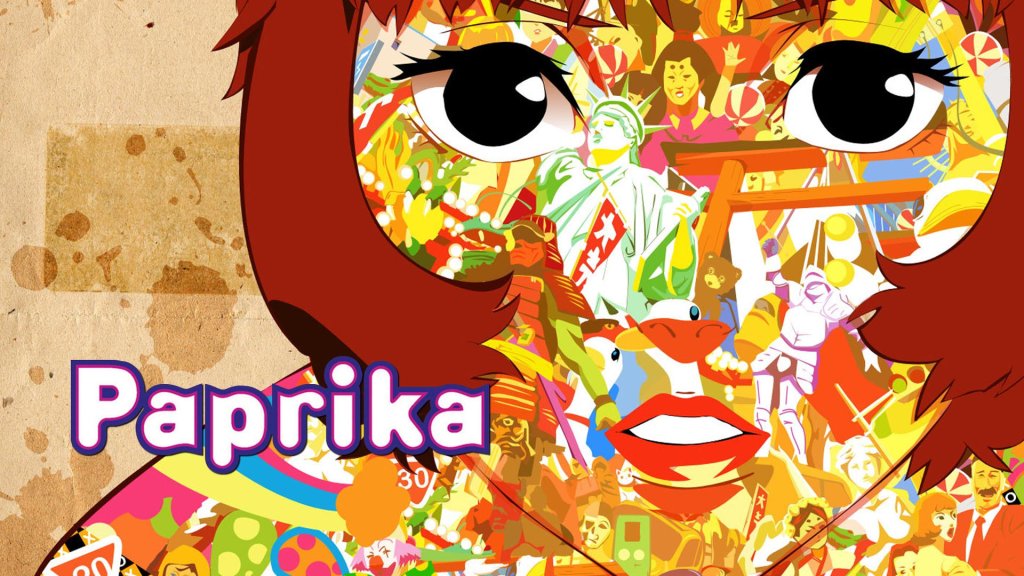
Paprika is a science fiction film about dreams and the role they play in expressing our hearts’ desires. Famously, the film is filled with surreal and provocative animation, and a plot that leaves many audiences confused after a first viewing. Given the subject matter, it comes as no surprise that it’s often speculated Christopher Nolan was inspired by Paprika to make the film Inception, although Nolan hasn’t confirmed these rumors. Still, when comparing the two side by side, it’s easy to see why comparisons between the two are often made: both stories center on “dream hacking,” and depict the barriers between people’s dreams in visually similar ways. However, Paprika is able to fully explore the transformative and limitless properties of dreams through the medium of animation.
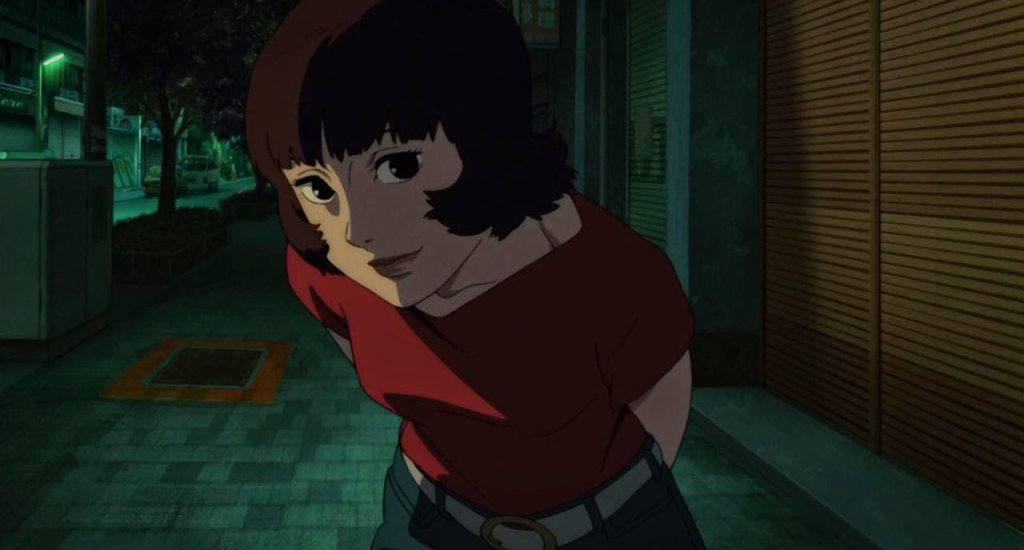
To clarify a few things that the film doesn’t say explicitly, Paprika’s plot follows a group of scientists who study dreams as they attempt to uncover and stop a dream terrorist group that seeks to use the technology the scientists are developing, the DC mini, to shatter the barriers between dreams and plunge the world into an eternal, dreamlike twilight in which people can live out their fantasies without physical limitation. The titular Paprika is the alter ego of scientist Atsuko Chiba, who has developed somewhat of a personality of her own. As a psychiatrist, Chiba uses the DC mini and Paprika to treat her clients in the dream world, connecting her to their dreams, as seen with Detective Konakawa. However, due to her extended use of the device, Chiba no longer needs the DC mini to enter the dream realm as Paprika, and Paprika even seems to exhibit an awareness of Chiba that the doctor either represses, or is unaware of herself.
One thing I really appreciate about Satoshi Kon’s writing is its ability to laugh at characters without taking away their dignity. The DC mini is invented by Dr. Kosaku Tokita, a scientific genius and child-at-heart. Notably, Tokita is obese, and while this is played for the occasional joke, Tokita doesn’t feel like he’s any less of a three dimensional character. We spend just enough time with him as an audience to be frightened for him when we see his happy-go-lucky id run wild in the dream world, transformed into a towering clockwork robot. Moreover, Tokita’s relationship with Chiba becomes the powerful expression of love required to ultimately stop the terrorists from taking over the dream world. I was reminded of the trans character Hana, from my favorite of Kon’s films Tokyo Godfathers (2003), who is constantly mocked and made fun of, but is ultimately the hero of the film. Tokita’s weight is humorous, but he’s still a human and is given dignity by the movie’s end.
During this watch, I resonated most strongly with Detective Konakawa’s subplot of remembering the passion he had for filmmaking, no doubt because I’ve recently been wrestling with my own passions lately. Within the dream, Konakawa’s appearance shifts and changes to that of legendary director Akira Kurosawa when Paprika asks him about his dream-movie. It’s fitting that in his dream, the person he’s pursuing and ultimately kills is himself, a representation of the dream he put down when he experienced the shame of not finishing his movie project as a young man. It’s interesting that Konakawa stops the “face” of the terrorist plot, but is ultimately a bystander when it comes to stopping the Chairman at the climax of the film; there’s no gun or evidence big enough to take out the giant fueled by nihilism, only dreams can fight that.

Speaking of that climax, what a spectacle! It’s almost frightening to watch the dreamers shed their human forms and fall into step in the happy-go-lucky parade, and to see the walls between dreams dissolve. Maybe it’s unnerving because we’re seeing people choose a dream over reality, but the synchronized chanting paired with their smiling faces always sends a shiver down my spine. This was actually the first time I watched the dub of Paprika, and I’m glad for it. Although the original Japanese voices give a fantastic performance, a story this heady kind of needs to be told in one’s original language to fully understand what’s going on. Between all the shape-changing and face-swapping, it’s no mystery why audiences find Paprika to be so beguiling and complex, and for that reason I would encourage viewers to get over any hang-ups they may have about dubs and watch it in their native language. Cindy Robinson, perhaps better known for her role as Amy Rose in Sonic the Hedgehog, gives a fantastic double performance as Paprika and Dr. Chiba, sounding like two completely different characters, and I enjoyed learning that the two voices share a body in real life. I was also surprised to hear Tokita’s voice was provided by Yuri Lowenthal, an actor I recognize more for playing anime heartthrobs and heroic characters. He brings an emotional depth to the role that I think solidified my feelings that Tokita isn’t merely a joke character.
While the primary studio that worked on this movie was Madhouse, a studio known for their impressive animation, it was actually a joint production with DR Movie, Studio Elle, and Production I.G. As with any animation project, there are too many names to highlight them all, but in researching this movie, I thought it was worth shouting out character designer Masashi Andô, who worked with Satoshi Kon on most of his projects, and has gone on to play a critical role as an animation director and key animator in the production of films like Your Name. (2016), Weathering with You (2019), and the latest film from studio Ghibli, The Boy and the Heron (2023).

Paprika ends on a hopeful note, with Detective Konakawa purchasing a ticket for a movie, his interest in film and directing seemingly rekindled. In the marquee, Satoshi Kon’s previous works Perfect Blue (1997), Millennium Actress (2001), and Tokyo Godfathers (2003) are shown, highlighting the director’s filmography. It feels like the bow at a curtain call, and considering how close this was to the end of Kon’s life, one wonders if he might have had an inkling of what his fate might be. Kon began production on a fifth film shortly after Paprika’s completion, Yume Miru Kikai, seemingly another meditation on the subject of dreams, but the film was never completed. Studio Madhouse has stated their interest in completing the film, despite its many setbacks, but considering how much time has passed, it’s hard to say whether that movie will ever see the light of day. Still, Paprika stands as a brilliant end cap to a bright and vibrant animator’s career.
 Sam Wolfe is alive
Pingback: Movie Club: Tokyo Godfathers (2003) | Sam Wolfe is alive