I remember a friend in college asking me over a decade ago if I thought there would ever be a live action One Piece adaptation. “Not a chance,” I answered, confidently. “It’s too goofy, there’s no way they could pull off the special effects.”
So many live action anime adaptations fall short of the mark when it comes to capturing the spirit of their original source material, and often feel embarrassing or awkward as a result. To this day, anime fans will shudder at the mention of Dragonball Evolution (2009), or Neftlix’s Death Note (2017) starring Willem Dafoe. Anime is hard to translate into 3D, and to bridge the gap between our world and any given anime or manga art style is a considerable task, even for the most practiced cosplayers. So much of the appeal of anime comes from being larger than life, so to recreate it in live action seems almost futile. Yet despite that difficulty, Matt Owens, the producer of Netflix’s adaptation, ONE PIECE (2023) has followed his dreams and set out on the task, and in doing so he’s captured the attention of the entire One Piece fandom. At its core, One Piece is a story about chasing after your dreams, no matter how big or wild they might be; who would I be as a fan if I didn’t give it a shot? Remarkably, the results aren’t a total shipwreck. Read on to see my thoughts on Netflix’s ONE PIECE.
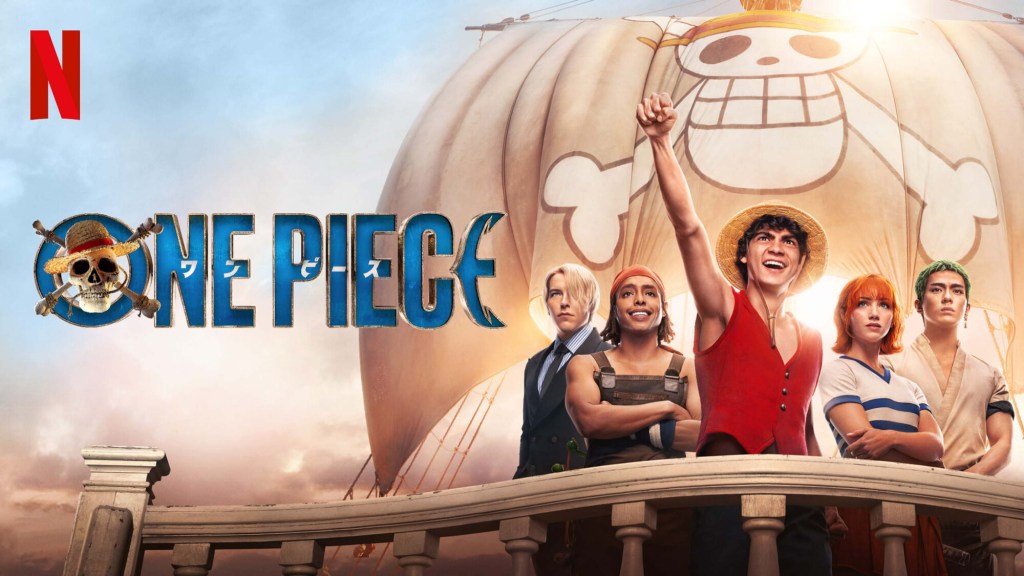
The following contains minor spoilers for ONE PIECE (2023)
Making a live action anime adaptation is a daunting endeavor, and for a while I didn’t really understand what the motivation behind them was. It isn’t as straightforward as going from manga to anime, where adding movement, sound, and color feels almost purely additive. The appeal of cartoons is that they aren’t constrained to the limitations of real life, and the action found in anime relies on the exaggerated movements and performances that would seem strange in live action. If the product feels like a compromise, we aren’t going to feel the same highs that we felt watching the anime in a live action version, so what’s the point?
A few years ago I had the good fortune of working with a few folks who had their hands in developing projects like this, and they explained the thinking in a way I could understand: the ultimate goal of these adaptations is to advertise the source material, the manga. The mentality goes back to the old adage, “a rising tide lifts all boats;” awareness of a live action series is awareness for the brand. You see this happen with anime series a lot, where an anime doesn’t exist to tell the entire story but instead raises awareness of it in the hopes that viewers will pick up the manga, or game it’s based on (Fullmetal Alchemist (2003), Hunter × Hunter (2011), and Land of the Lustrous (2017), for example). And it works, too. Often the audience for a series will grow after an anime adaptation comes out. Why wouldn’t the same be true for a live action adaptation? In a way, it’s similar to what HBO’s Game of Thrones did for A Song of Ice and Fire.
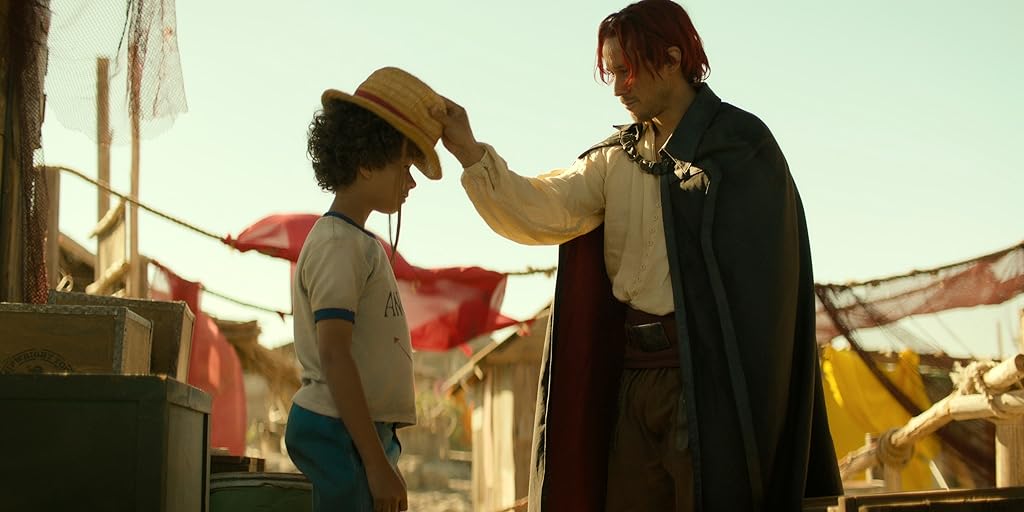
Producers of live action adaptations find themselves at cross purposes then: they need to appeal to both fans of the original, and to people who haven’t seen it, or aren’t interested in reading the source material. My colleagues expressed the idea that a good live action adaptation is able to authentically capture the spirit of the source material while still offering something new for people who have already seen the original. A shot-for-shot recreation only invites comparisons between the two, and can make the live action version feel insubstantial. And to me, that makes sense; you need to do something different in the adaptation or it will just seem like a worse version of the original. I based my hopes for Netflix’s series, and for most live action adaptations of books and anime, on what those colleagues shared with me.
I had low expectations going into ONE PIECE. I probably would not have watched it on my own; I’ve been burned before with live action anime adaptations, though there are a scant few I enjoy. Moreover, I’ve been reading the One Piece manga for half of my life, so I know the source material, and I have enough of an investment in it that I wasn’t interested in seeing it done poorly. Nevertheless, when the subject came up during Movie Club, a watch party was inevitable. I didn’t follow too much of the conversation around Matt Owens before the show was coming out, but I understand, to him, the biggest hurdle was getting the fans of the original to give the show a chance. What really helped that goal come to fruition was the endorsement of series creator, Eiichiro Oda, who was given more creative control over the show than producers in his position are usually afforded. Hearing that the creator of the manga thought the live action was up to his own standards was a huge endorsement to me, and I’m sure other fans feel the same way.

Netflix’s series translates the first 45 episodes of the One Piece anime, the first 96 chapters of the manga, into eight hour-long episodes. That alone is already a huge service to newcomers of One Piece; with over 1,078 anime episodes and counting, One Piece’s length is one of the most frequently cited reasons I’ve heard for why people don’t want to pick up the series. In an effort to make the series more digestible, a diehard fan initiative, “One Pace,” has even started the ambitious task of reediting the anime, cutting the filler so it has the same pacing as the manga. By shortening how long it takes to catch up, ONE PIECE is already offering something that the other mediums aren’t, and this truncating will prove to be what sets the live action adaptation apart from the rest of the franchise. Pairing the story down is a great answer to the question of how this adaptation has appeal to both new fans and old.
So how does the series manage to tell the story so quickly? It removes a lot. There are a lot of moments and characters in One Piece’s story that aren’t as important when it’s being summarized on a scale like this; they clearly wanted to tell the entire East Blue Saga in one season, so there wasn’t time for minor characters like Chouchou, or Jango the hypnotist. Where they don’t manage to tell those minor stories, there are a litany of easter eggs for fans to spy in almost every scene, often referencing the cut content. There’s something exciting about retelling One Piece now that so much of the story has been told, because now there are so many distant things you can reference that manga-readers will recognize, and build the world for new fans. While I definitely wished we had seen some of the content that was skipped for time, I think it creates the perfect on-ramp for new fans to watch the anime if they enjoy this series, as the story they’re already familiar with will still have different twists and turns, just as this adaptation has from the original story.

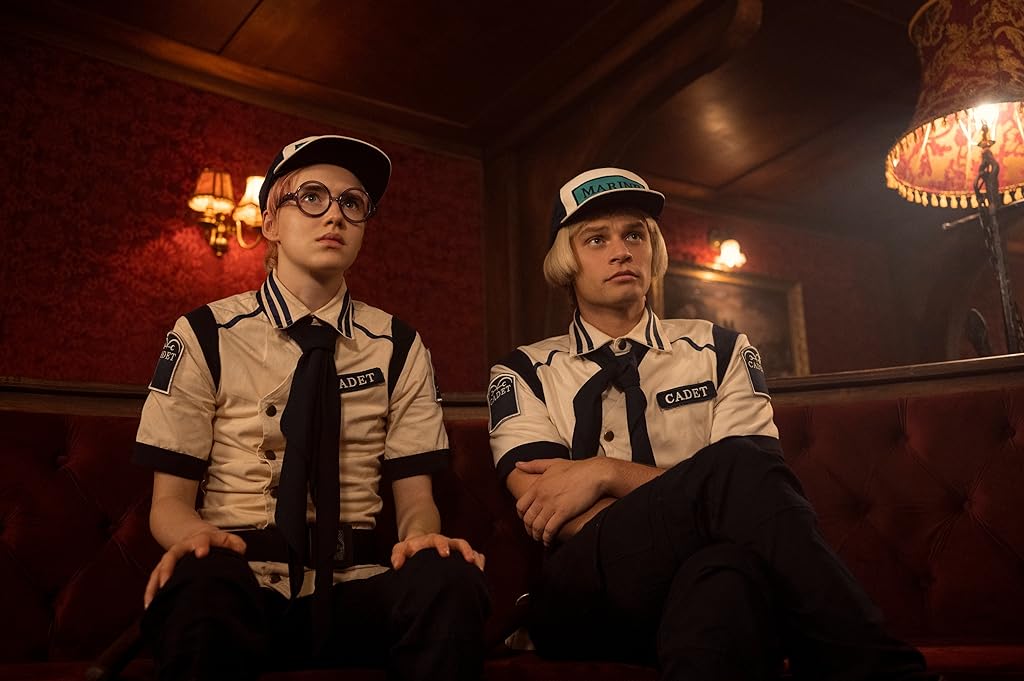
I was surprised by how much I enjoyed the new story content that was included in ONE PIECE. Previously Koby’s training was all off-screen, so it was interesting to see what he was doing while Luffy was bouncing from island to island. Seeing Koby’s perspective also reinforced that Garp was one step behind Luffy, and introduced a conflict between them that the anime doesn’t handle nearly as dramatically. Vincent Regan is an outstanding choice for Garp, and he brings a worldly and chaotic energy to the role. That said, some aspects of the production stood out as tonally off to me. The whole show looks like they slapped the Michael Bay filter over it, and I’m not really sure why; it makes the world look weathered, which I guess is realistic, but man is it bland. On the other hand, Buggy the Clown’s circus felt like we had suddenly stumbled into an episode of Goosebumps, and it was a bit distracting. I love the ambition behind making little Buggy look like a practical effect, but the dark lighting and his constant movement just made the whole thing look very strange. There were also some story beats that were changed, like how the people of Cocoyashi Village actually thought Nami had betrayed them in this version, rather than them secretly knowing what she was doing. It felt like a decision made in service of spending less time with those characters, which I guess I understand, as they only had eight episodes to get through a lot of story, but it cheapened some of Nami’s story. Hopefully they’ll have a higher episode count in the future so some stories won’t have to be short-changed like this.
The cast had the very difficult task of bringing One Piece’s vibrant characters to life, and I’m surprised to say, I think this is the first live action anime adaptation I’ve seen that feels like it really translates the energy of the characters to live action. Japanese live action adaptations often feature stiff, exaggerated acting, probably in part because those performances are rooted in the same school of acting that Japanese voice acting comes from. By comparison, the acting in ONE PIECE, I’m glad to say, takes a relatively reserved approach. The actors put a lot of work into body acting, the most clear example being Iñaki Godoy as protagonist Luffy. Godoy rolls around the set, and shows his lanky arms when he emotes in a way that sells the “made of rubber” thing better than any CGI could accomplish in its place. All the actors seem to be leaning into an overall campy production, and it suits the series really well. The world of One Piece is full of fish men, and pirates who dress like cats, but it also has severe conflicts and high steaks, and the cast does a really great job of being silly when they need to be but restrained when the scene calls for it.
The action in this show is quite dialed back compared to the anime, which was a wise decision. Zany visuals like Luffy attacking Kuro’s crew with a mast, and stretching his neck out of Aarlong’s pool so he can breathe, just wouldn’t have worked in live action. Generally this more reserved presentation of the powers works very well, although occasionally the action can feel quite slow and weightless; watching Luffy break the pillars in Aarlong’s tower didn’t really sell Luffy as strong to me, but rather that the pillars were made of styrofoam. Shaolin Soccer (2001) was mentioned by Oda as an inspiration for how to handle the action scenes, but they could have leaned into that kung-fu slapstick a little bit more. Still, I appreciate that they really used the over the top rubber attacks sparingly, as they looked okay, but not good enough to show the audience too much.
As much as I enjoyed the cast, sometimes line deliveries felt stiff, or had a lack of emphasis. Many of the actors in ONE PIECE are from other parts of the world, and likely speak English as a second language, and to me that enhances how the show uses accents to make the world feel bigger; it’s really cool that the various characters who are from different islands all speak differently. This is a choice I almost wish the anime could have taken, because I really like how it communicates the idea that people from all over live on this sea. Moreover, it helped the series from feeling too American (or too Japanese), like previous adaptations have been. It feels unfair to highlight any one cast member, because I honestly felt that everyone got into the spirit of their characters, even the villains and side characters. If I’m to highlight anyone though, I’d have to mention Morgan Davies as Koby and Aidan Scott as Helmeppo. ONE PIECE’s new scenes about Koby and Helmeppo training as marines weigh almost entirely on these two. No disrespect to Koby fans, but this is probably the weeniest part of his character arc, and Davies managed to capture that character and showcase some of his immediate growth that we didn’t really get to see before in this one season, through coke bottle glasses no less. Scott has the difficult task of playing a character we’re supposed to initially dislike, and then win us over. The manga did this in a few cover chapters, and maybe the anime made a filler episode about them, but Scott has to do it in just a handful of episodes, and he walks the line perfectly.
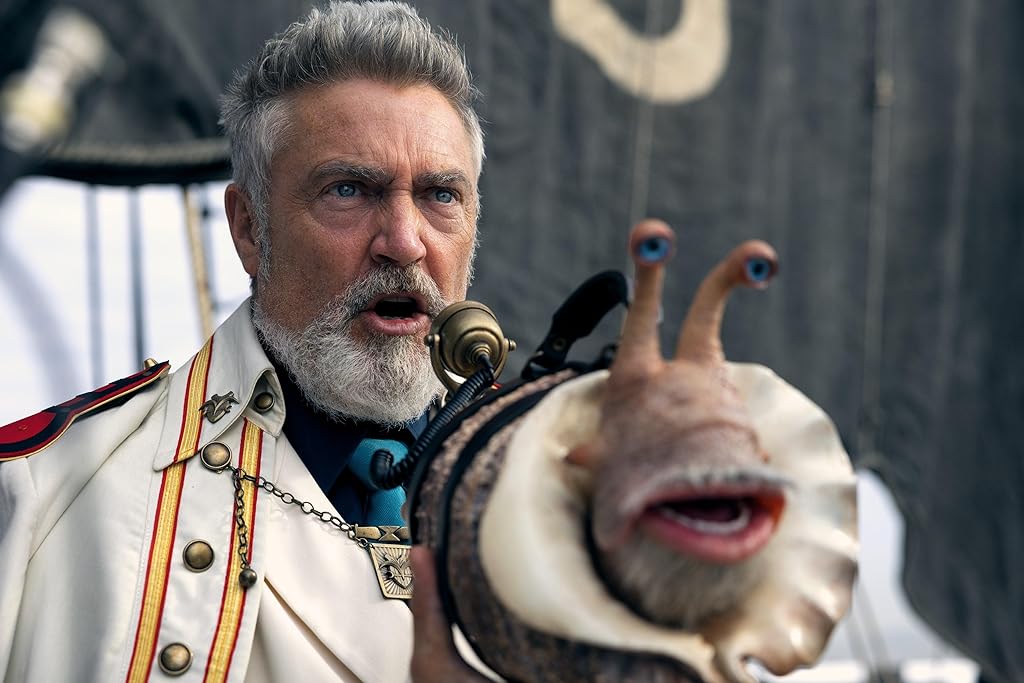
I hope one day the sets of this production will become a tourist attraction. The locations translated into live action perfectly portrayed the artistic but goofy world. When everything is animated, it can be hard to remember that Aarlong’s base of operations is a water park, or that entire towns get wrecked by pirate crews rolling through them, and seeing it brought to life made the tone feel campier, but darker. With so many wooden buildings and ships, plus the original soundtrack enhancing the experience, the series feels more piratey than ever, feeling at times like a fusion of Pirates of the Caribbean and Alice in Wonderland. The costuming was also exactly what I would have hoped it would be, really bringing the weird fashion of One Piece to life. It was very cool that rather than wearing one outfit the entire season, the main characters wore different outfits that had been featured on color spreads in the manga; a fun easter egg to look out for. The den den mushi props also were better than I thought they’d be; it’s no wonder they were featured so heavily in the advertising for this show. I was a little sad that the snails behave opposite to how they do in the anime, taking on the appearance of the person using the receiver, not the person they’re connecting to, but it’s a minor gripe. I’m sure Oda answered an SBS sometime in the last 10 years that explains that they work both ways.
Overall, I’m shocked to say, ONE PIECE breaks the curse of live action anime adaptations, certainly for western adaptations. This is a show I can see myself recommending to friends who don’t watch anime, and that’s what it needed to be at a minimum. Is it perfect? No, but it’s much more than competent. The show is very campy, and can be tonally all over the place–Buggy’s sailor-mouth caught me off guard–but One Piece has always been this way: crass, fun, and unafraid to be itself. It’s a weird show, but that’s because it’s a weird story, and seeing it reimagined in this way felt like it deepened my understanding of what One Piece’s vibe is. I think the changes that were made improve this more streamlined version of the story, and for anyone who dislikes it, the anime still exists. One thing’s for sure, I’ll definitely be keeping an eye on Matt Owens and his upcoming projects, including the highly anticipated season two.
 Sam Wolfe is alive