Some time in 2017, between filming seasons of Game of Thrones, Danish actor Nikolaj Coster-Waldau grew out his mustache to be the leading man in a gritty prison drama, this week’s movie club pick, Shot Caller (2017). When stockbroker Jacob is sent to prison for killing someone in a drunk driving accident, his survival depends on joining up with a white supremacist gang. But safety doesn’t come without a price, and Jacob is forced to confront what lines he’s willing to cross when the gang starts asking for favors in exchange for their protection. Read on to see my thoughts on Shot Caller.

The following contains spoilers for Shot Caller (2017)
This is one of the best anti drunk driving public service announcements I’ve ever seen. The plot of this crime drama was not terribly complex. Jacob becomes determined, after his life is in deep enough shambles, to become “the guy calling the shots” behind bars, the leader of the criminal underworld. Jacob’s fall is mostly bad luck, so we don’t get a very good sense of who he is outside of loving his family. It isn’t until deep into the story that we see him develop a dark sense of justice, so his Breaking Bad-esque heel turn feels somewhat sudden, even with the two hour runtime. The cast give strong performances, but they aren’t given a very strong script to work with. Still, it’s interesting to see Coster-Waldau in a genre film like this when I’m so used to seeing him in a fantasy setting, and he does a good job. His face is really expressive, and he delivers his lines with a severity that made them feel believable to me, even if his accent wandered occasionally.
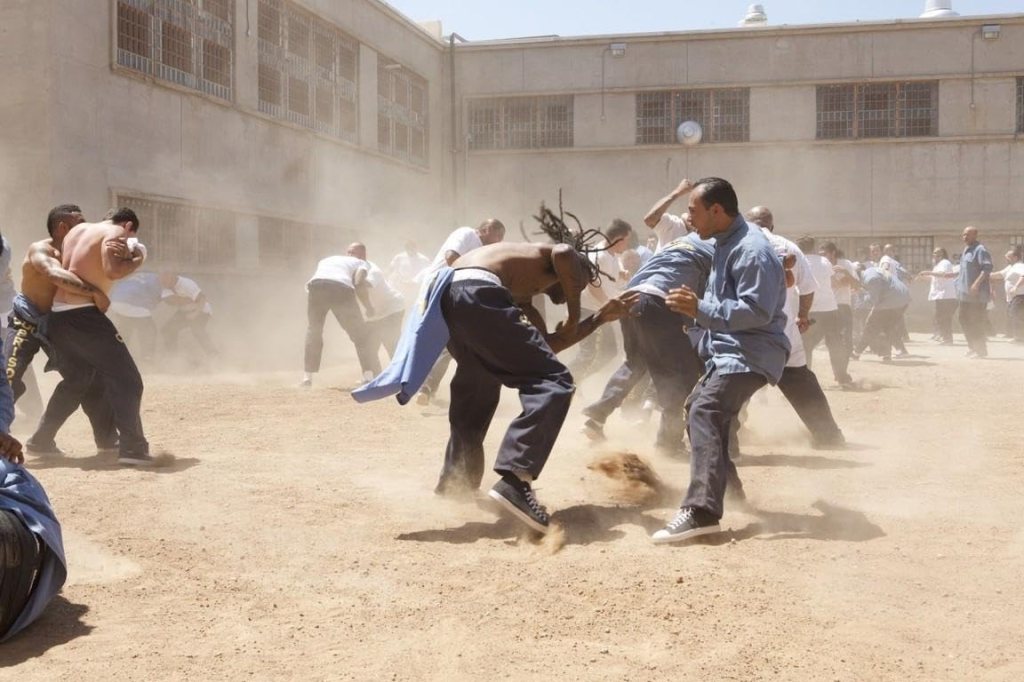
I wasn’t aware during our viewing, but Shot Caller is apparently the final film in a trilogy of movies known as the “prison trilogy,” written and directed by Ric Roman Waugh. It’s not immediately clear how these movies fit together, as looking at their IMDB listings, the characters they follow seem to be unrelated, although some of the actors do appear in multiple films (as different characters). While it didn’t feel like there was a strong narrative connection to hang onto, the movie had strong cinematography. Dana Gonzales, director of cinematography for the trilogy, has a great sense of conveying the oppressive feeling of life in prison. Establishing shots showing prisoners in the yard, and on death row, were effective at transporting me into the scenes. The action in this movie isn’t glamorous, but the violence is depicted with heart wrenching intensity. Outside of prison, however, things felt less believable, and I’m not really sure what to attribute that to.
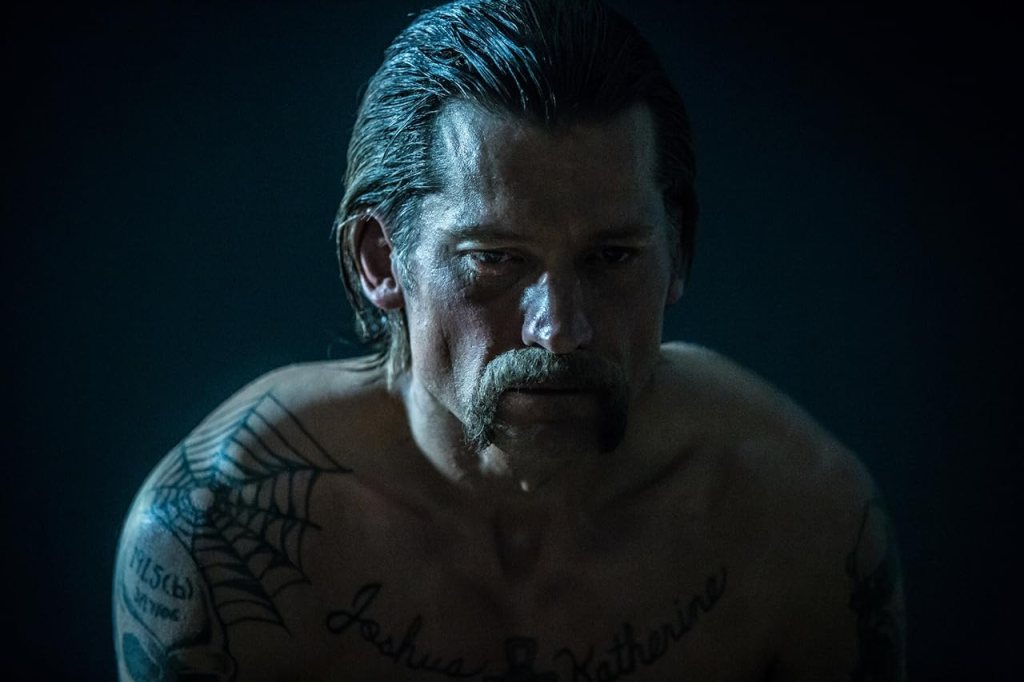
The movie uses Coster-Waldau’s appearance to communicate a narrative that starts en media res; Jacob’s exterior becomes etched in tattoos, and a strongly defined handlebar mustache. The makeup artists put a lot of work into his tattoos, but that facial hair always looked strange to me, probably because I’m used to seeing Coster-Waldau clean shaven. Still, the man knows how to brood, and in the moments where the lighting complimented the makeup, he really looked the part. I think the challenge of this movie was that it needed to show this evolution from an average looking guy to a tatted up Neo Nazi. Despite seeing the steps Jacob takes to get there, that transition still feels pretty abrupt. I think we needed to spend more time on him considering those first tattoos to really sell the transformation.
I think what’s surprising to me about Shot Caller is how by the numbers it felt. I think its strongest moments were in establishing shots, and conflict between background prisoners. However, considering how weak some character motivations were, those effective moments didn’t always feel earned, and sometimes even seemed gratuitous. I wanted that authenticity to be in service of something a little less predictable. Jacob’s transformation into the man working from the inside felt more like something he had to do because of the movie’s genre, rather than an actual motivation the character felt. Maybe it’s just the noir fan in me, but I can’t help but feel this would have been a more memorable film had it gone for a darker ending, though I’m not sure if the other movies in this trilogy prevent that from happening.
Shot Caller was an interesting flick, but this may be a case of wrong demographics. Noir stories interest me, but modern prison dramas have never really caught my attention. While I can appreciate the cinematography and acting here, the narrative felt weak and predictable, and I’m really not versed in this genre enough to know whether that was on purpose or not. What I can say is Shot Caller didn’t convert me into a fan. Hopefully the film lives up to the expectations of fans of the “prison trilogy,” but as for me, I’ll be presenting my “get out of jail free” card.
 Sam Wolfe is alive