Originally released in 1986 in Japan, and released three years later under the name Dragon Warrior, Dragon Quest is the first major attempt at translating the dungeon delving experience of Wizardry for the Apple II to the Japanese home family console–the Famicom. It was an ambitious task considering the Famicom’s limited interface. However, Yuji Horii and his team were up to the task, distilling the roleplaying game (RPG) genre down to what they thought were its most essential elements. That’s what got me interested in revisiting this classic RPG; being an avid tabletop RPG enthusiast, I was very interested to see how such a streamlined version of the genre managed to create such a lasting impression that it spawned a franchise.
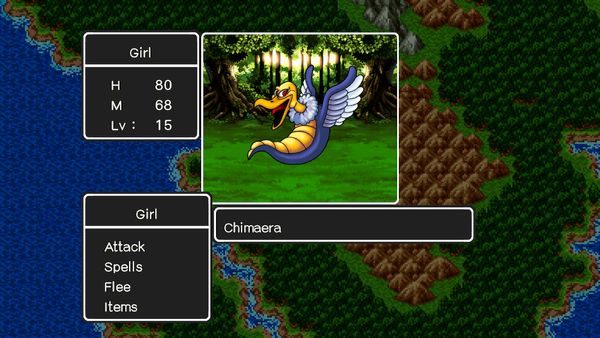
I’ve been aware of the Dragon Quest series since high school, but it wasn’t until my adulthood that I actually sat down to play one of the games. My first title in the franchise was Dragon Quest Monsters: Joker, a spinoff series that’s more of a monster collector game. A friend once described Dragon Quest as chicken noodle soup and a warm blanket, and playing DQM:J, I felt it. There’s something very charming about the softness of the world of Dragon Quest. Dragons’ tongues hang out of their mouths, and slimes approach you with a happy-go-lucky grin; your quest is full of perils, but the world is whimsical and full of character. This playful aesthetic is present in the artwork created by the games’ character designer and monster artist, Akira Toriyama, but it’s also present in the cheerful sound effects and triumphant music composed by Koichi Sugiyama. Playing DQM:J inspired me to explore the series further, and while I know there are great reasons to start exploring later installments, I was drawn to the beginning.

Dragon Quest is the archetypal single player RPG experience. So many games that came after it draw inspiration from what elements Yuji Horii and his team decided were most important to RPGs, specifically the feeling of exploring the world and finding new items, the exhilaration of leveling up after defeating a difficult monster, and the excitement of a story in which you are the hero protagonist. In their estimation, these were the most accessible mechanics of the genre, and makes for a great starting point in the development of console RPGs.
In contrast to how many character options Baldur’s Gate 3 had, Dragon Quest is more directed in its roleplaying (cut it some slack, the game is almost 40 years old!). Players control a warrior, the scion of the legendary hero Erdrick, encountering random monsters on the overworld and talking to NPCs in villages to access shops and learn hints. Combat is turn-based, and presented in a first person perspective, and is navigated through menus. Players have only three equipment slots: weapon, shield, and armor. It’s a simple game, but that doesn’t mean it doesn’t have a few tricks up its sleeve. Finding and saving the princess, a side quest that few NPCs talk about, is an enjoyable discovery for players, and the boss monsters put up quite a challenge, even when you see them coming.

I played the Switch version of Dragon Quest, which is a port of the Android/iOS versions of the game. I went into the game with checked expectations. I expected a lot of grinding, which I got, but I was caught off guard by the dialogue, and how the characters spoke. The language used throughout the game is reminiscent of early modern English, although battle screens are presented in a modern vernacular. Graphically the game generally looked how I expected it would, save for the NPC sprites, which looked particularly chunky and blocky. On the other hand, the remake’s battle screens featured HD artwork to represent enemy monsters. The enhanced music in the remake was a really nice addition too, and helped keep me immersed in the game. The soundtrack is triumphant and bombastic in the right places, and somber when it needs to be. The main theme alone is so warm and powerful, it pulled my heartstrings even without an emotional connection to the series. (ED note: the orchestral rendition linked is not the version that plays in the Android/iOS remake.)

Some of the game’s early design features are limitations of the original hardware it was made for. For example, the game does not remember which doors you have unlocked with magic keys between maps. For a more conservative player, it would be important to write down whatever information is revealed by NPCs behind locked doors, but as I was quite comfortable fighting enemies until I had enough gold to drown the kingdom, I usually had the upper limit of magic keys in my inventory at all times. The trick became keeping just enough magic keys to access the NPC in each village who sold more keys. Several of the more difficult aspects of the game have been made much easier in the remakes, such as previously invisible items on the ground now having an eye-catching shimmer to make them easier to find. While I’m sure some might prefer the original experience, this feature alone, I think, makes the remakes the versions worth playing, unless triangulating your location with the Princess’ Pledge sounds fun to you.
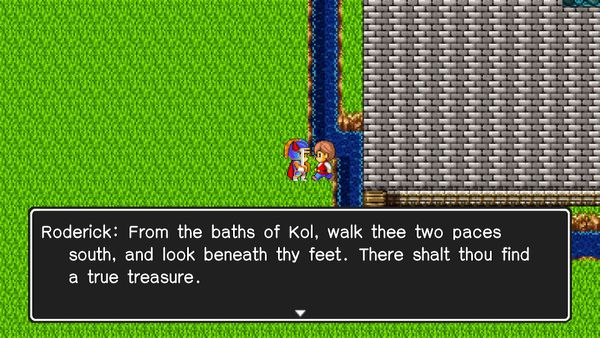
By far I was most impressed with the game’s ending. Dragon Quest has a satisfying progression, and by the final areas players are encountering monsters that they considered to be boss monsters at the start of the game. Winning battles at this stage felt so satisfying, and I felt encouraged to explore and find new weapons and armor, welcoming the challenge of any extra enemies I might stumble into. Without going into spoilers, the Dragonlord will try truly everything to defeat you, it makes for an exciting and interesting finale.
By the time the credits were rolling, I felt so relieved and happy that I had saved the weird little world the game had shown me. I felt the warmth my friends had described, that cozy feeling that Dragon Quest just exudes. Between the synthesis of the artwork and music, and maybe the charm of how small the game was in contrast to the ambitions of its creators, I couldn’t help but shed a slime-shaped tear. In just a handful of hours, Dragon Quest stole my heart, and I can’t wait to play another game in this storied series.
 Sam Wolfe is alive